Tools
What’s the difference between SDXL, Flux, and Gemini prompting ?
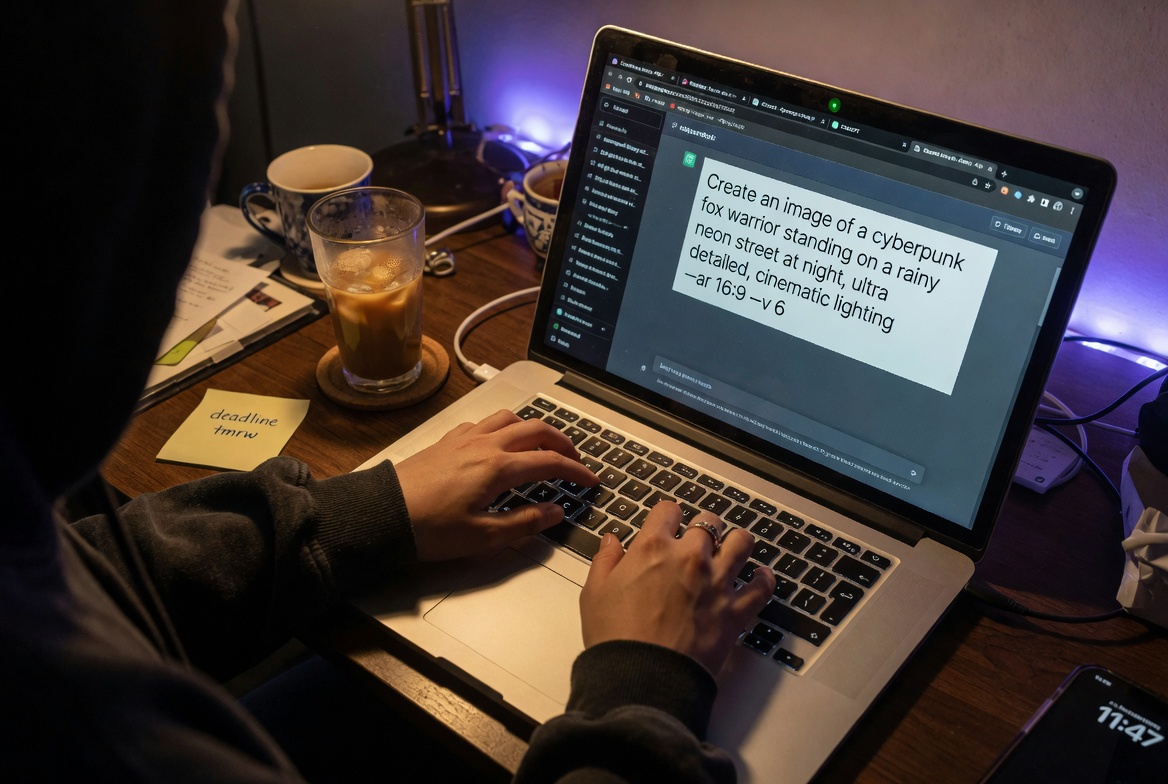
Among the most discussed systems today are Stable Diffusion XL, FLUX.1, and newer structured generation approaches based on JSON workflows. While they are often grouped together under the same “AI image generation” category, they actually work in very different ways.
Understanding those differences helps explain why some models feel more artistic, others more realistic, and why certain workflows are better suited for automation or production pipelines.
SDXL: the evolution of classic Stable Diffusion
SDXL became one of the most important open image generation models after the original Stable Diffusion era.
Compared to older SD 1.5 models, SDXL introduced:
- better image coherence,
- improved lighting,
- higher native resolution,
- stronger composition understanding,
- and significantly better realism.
SDXL quickly became popular because it offered a strong balance between flexibility, customization, and open-source accessibility.
One of its biggest strengths is the ecosystem surrounding it. Thousands of LoRAs, checkpoints, ControlNet workflows, and fine-tuned models were built around the SDXL architecture.
Prompting on SDXL often relies heavily on keywords and visual concepts.
For example, a typical SDXL prompt might look like this:
masterpiece, ultra realistic, cinematic lighting, detailed skin,
1girl, black hair, green eyes, leather jacket, depth of field
This style of prompting became extremely common because SDXL reacts strongly to descriptive tags, photography terms, and style keywords.
Flux: a different generation philosophy
Flux arrived with a noticeably different approach.
The first thing many users noticed was the improved natural language understanding. Flux models tend to interpret full sentences more naturally and often produce images that feel more coherent straight out of the box.
Compared to SDXL, Flux generally focuses more on:
- scene consistency,
- cinematic realism,
- natural composition,
- and contextual understanding.
Many creators describe Flux outputs as feeling less “AI-generated” and more photographic.
Prompting also feels very different.
Instead of stacking tags and keywords, Flux responds extremely well to natural descriptions such as:
A realistic young woman standing in Tokyo at night after the rain,
wearing a black leather jacket while neon reflections light the street around her.
This more conversational style is one of the reasons Flux became especially popular among creators focused on realism and cinematic photography.
The biggest difference: ecosystem maturity
Despite Flux’s impressive quality, SDXL still has one enormous advantage: ecosystem maturity.
SDXL has:
- years of community development,
- massive LoRA libraries,
- advanced tooling,
- extensive tutorials,
- and highly optimized workflows.
Flux is newer. Its ecosystem is growing quickly, but it still lacks some of the depth and compatibility SDXL accumulated over time.
That creates an interesting situation today:
SDXL often offers more control and customization,
while Flux frequently produces stronger realism with less effort.
Many creators now use both depending on the project.
JSON-based workflows are changing AI pipelines
Beyond the models themselves, another major evolution is happening: structured generation systems based on JSON.
Unlike traditional prompting, JSON systems organize instructions into structured data blocks.
Instead of writing one large prompt, the image request is separated into categories.
For example:
{
  "subject": "young woman",
  "location": "Tokyo street at night",
  "lighting": "cinematic neon",
  "style": "photorealistic"
}
This approach is becoming increasingly important for:
- automation,
- AI applications,
- workflow generation,
- APIs,
- character systems,
- and scalable production pipelines.
Instead of manually rewriting prompts every time, applications can dynamically assemble scenes, lighting setups, or character descriptions programmatically.
This is especially useful for advanced AI tools and generation platforms.
Why all these systems coexist
A common misconception is that newer models completely replace older ones.
That rarely happens in AI image generation.
Each system develops its own strengths:
- SDXL excels at flexibility and customization,
- Flux pushes realism and natural scene understanding,
- JSON workflows improve automation and scalability.
In practice, most advanced creators combine multiple systems together rather than relying on a single model.
The future of AI generation will likely involve:
- increasingly realistic models,
- more structured workflows,
- stronger automation,
- and hybrid pipelines mixing several architectures at once.
And as the technology evolves, understanding the differences between these systems becomes just as important as learning prompting itself.